A Bit Of a History Lesson
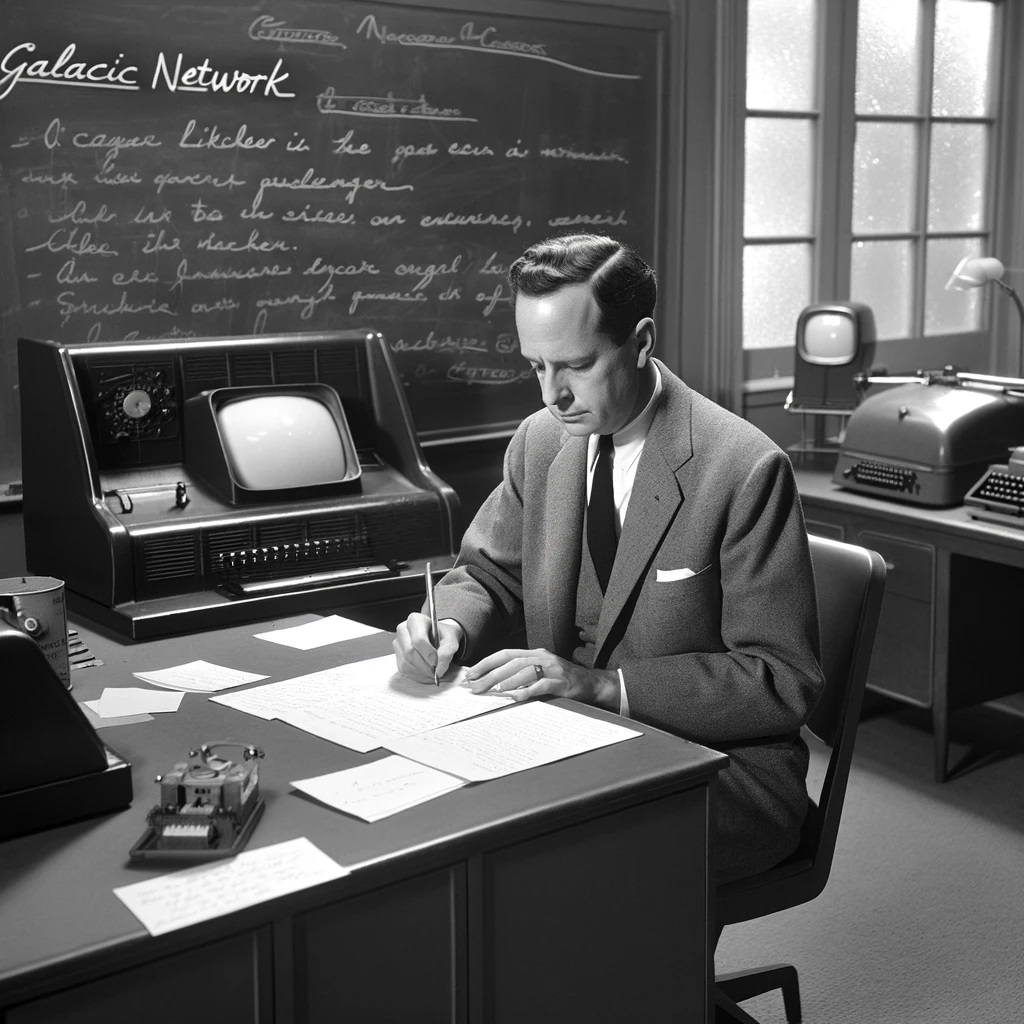
In August 1962, J.C.R. Licklider, a researcher at MIT, wrote a series of memos outlining his concept of a "Galactic Network." This network would provide people access to data and programs from any location. Licklider's idea was the precursor to the modern-day internet. He was the first head of the computer research program at DARPA (Defense Advanced Research Projects Agency), where he convinced his successors of the importance of this networking concept.
In 1961, Leonard Kleinrock published the first paper on packet switching theory. He convinced Roberts that using packets rather than circuits for communication was feasible, a significant step towards computer networking. In 1965, Roberts and Merrill connected the TX-2 computer in Massachusetts to the Q-32 in California, creating the first wide-area computer network. This experiment confirmed Kleinrock's conviction that packet switching was necessary.
 In 1961, Leonard Kleinrock published the first paper on packet switching theory. He convinced Roberts that using packets rather than circuits for communication was feasible, a significant step towards computer networking. In 1965, Roberts and Merrill connected the TX-2 computer in Massachusetts to the Q-32 in California, creating the first wide-area computer network. This experiment confirmed Kleinrock's conviction that packet switching was necessary.
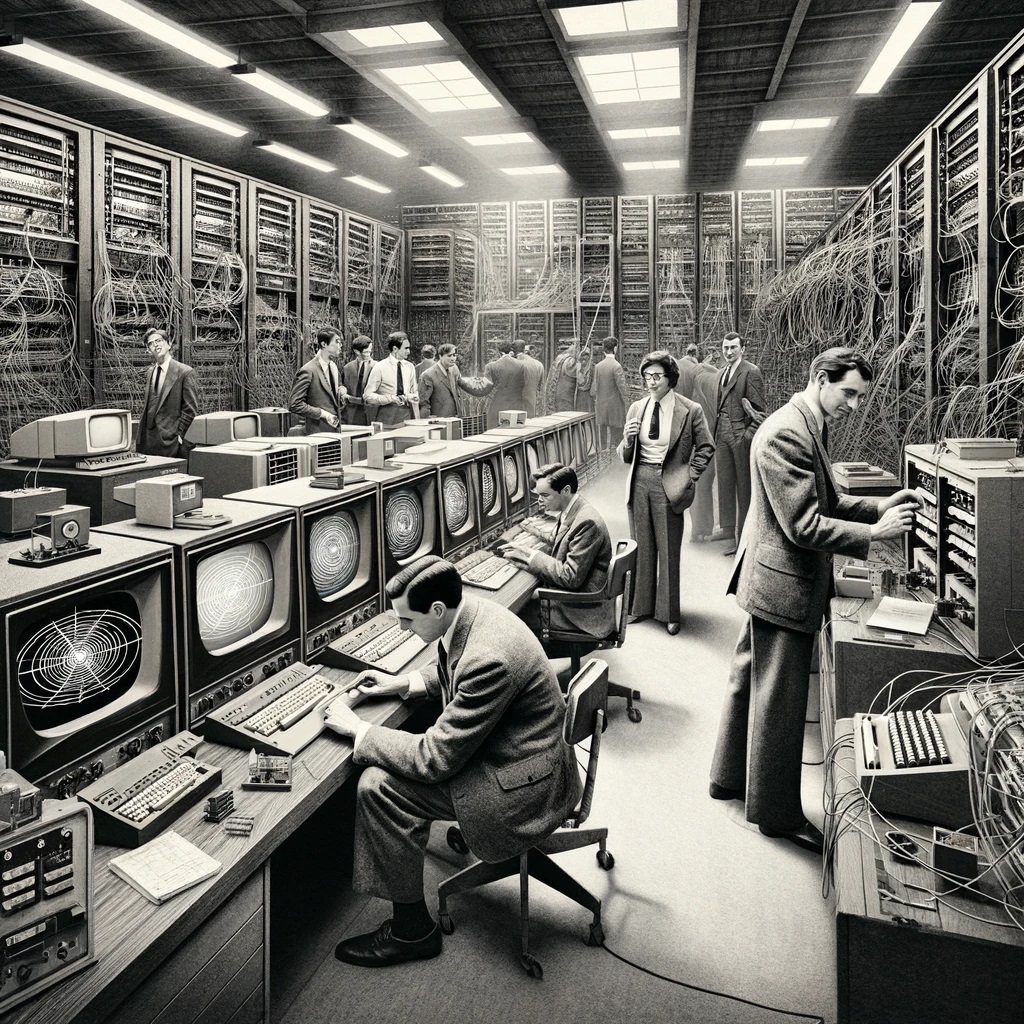 In August 1968, Roberts and the DARPA-funded community refined the ARPANET's structure and specifications. DARPA released an RFQ (Request for Quotation) to develop packet switches called Interface Message Processors (IMPs). BBN (Bolt Beranek and Newman) won the RFQ in December 1968, and as their team worked on the IMPs, the ARPANET's overall architectural design was led by Bob Kahn. Roberts optimised the network topology with Howard Frank and his team at Network Analysis Corporation, while Kleinrock's team at UCLA (University of California, Los Angeles) prepared the network measurement system.
Kleinrock's Network Measurement Center at UCLA was the first node on the ARPANET due to his work on packet switching. BBN installed the first IMP at UCLA in September 1969, connecting the first host computer to the network. Stanford Research Institute (SRI) provided a second node with Doug Engelbart's project. SRI also supported the Network Information Center, led by Elizabeth (Jake) Feinler, which was responsible for maintaining tables of host name-to-address mapping and a directory of the RFCs (Request for Comments).
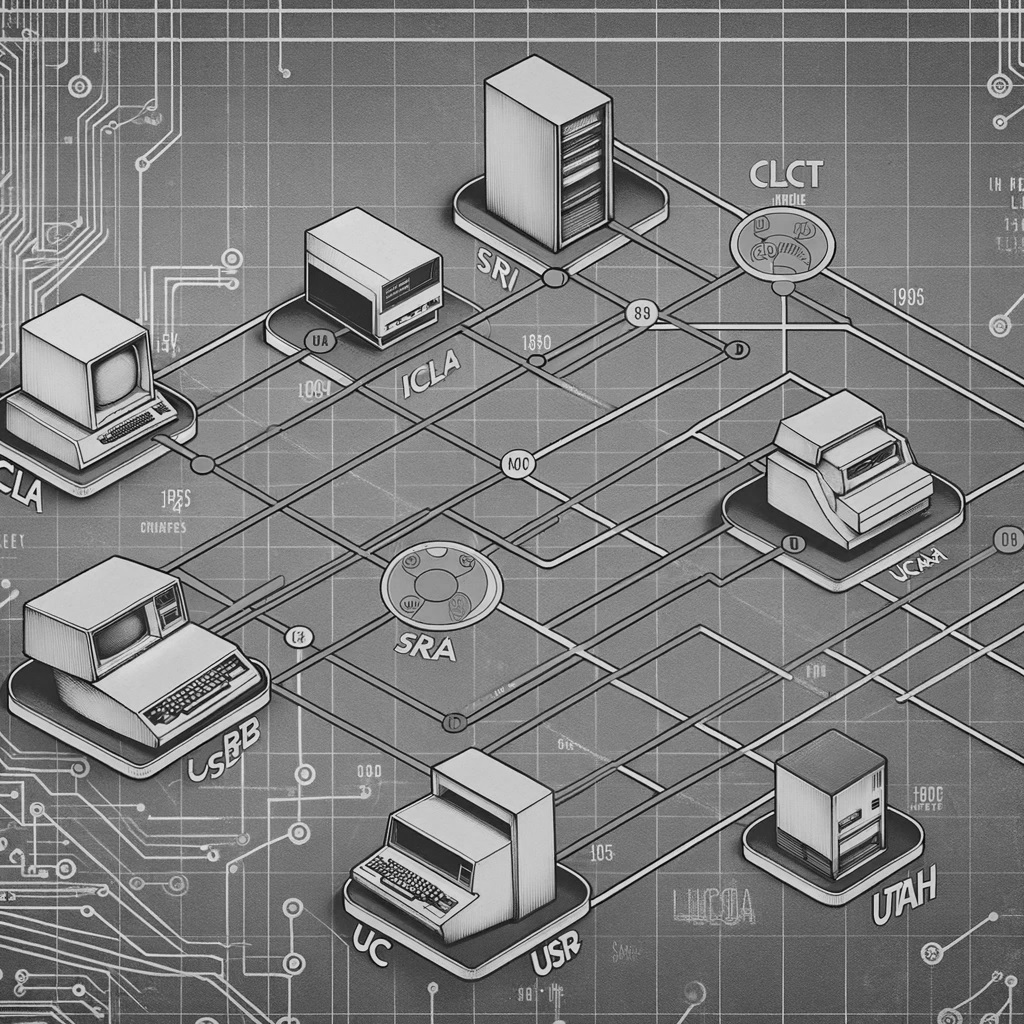 In 1969, Kleinrock's lab sent the first host-to-host message to SRI when SRI was connected to the ARPANET. Two more nodes were added at UCSB (University of California, Santa Barbara) and Utah. These last two nodes developed methods for displaying mathematical functions and 3-D representation over the network. By the end of 1969, this initial ARPANET of four host computers marked the beginning of the Internet as we know it today.
Computers were quickly added to the ARPANET in the 1970s. The Network Working Group (NWG) completed the Network Control Protocol (NCP) in December 1970, allowing network users to develop applications as the ARPANET sites implemented NCP between 1971 and 1972.
In 1972, the ARPANET was demonstrated publicly for the first time, and email was introduced as its first "hot" application. Ray Tomlinson wrote the basic email message software. In July of that year, the first email utility program was created to list, selectively read, file, forward, and respond to messages. Email quickly became the most widely used network application for over a decade and was a precursor to the enormous growth of "people-to-people" traffic on the World Wide Web today.